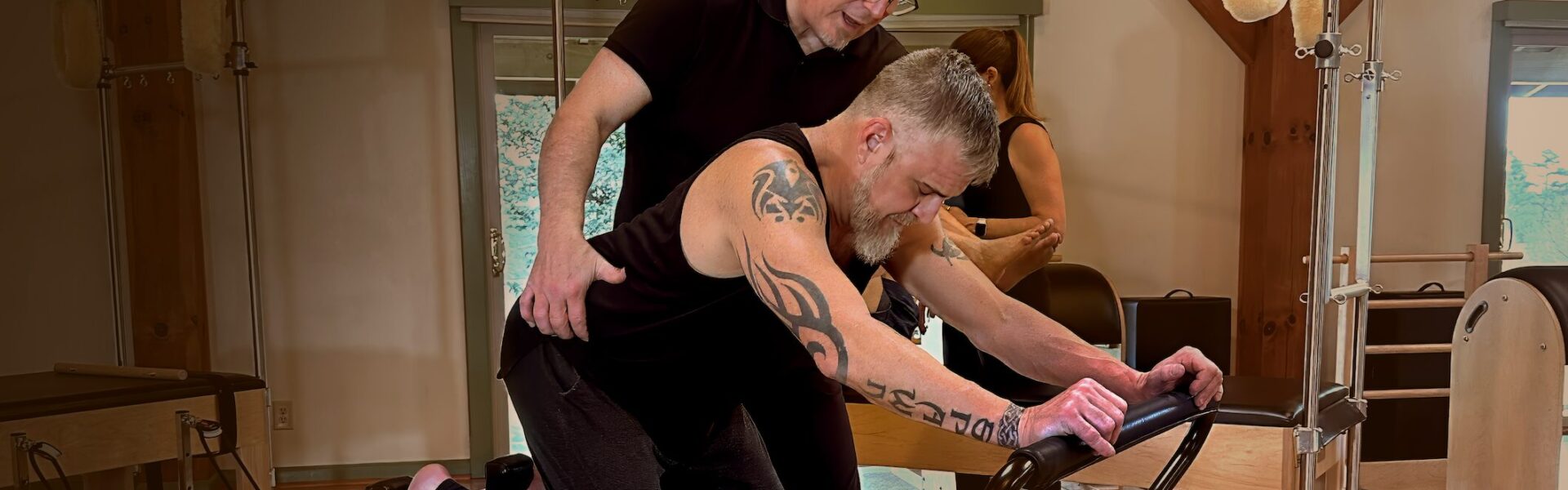
At Polestar, we believe Pilates is more than a workout. It’s a movement philosophy rooted in science, designed to bring you into alignment—not just physically, but mentally and emotionally too. Whether you’re dealing with pain, seeking better posture, or simply want to move through life with more ease, Pilates offers a pathway to lifelong wellness.
The growing popularity of our Pilates Hour webinars and the high search volume for questions like “what Pilates do” prove that people aren’t just curious about exercises—they’re looking for meaning in movement.
The Short Answer: Yes, and Here’s Why
Pilates is good for you because it supports core stability, flexibility, postural alignment, and functional movement. Numerous studies have shown its effectiveness in managing chronic pain, improving mental wellbeing, and reducing the risk of injury. It is accessible to people of all ages and fitness levels, and it adapts to your body’s unique needs.
According to Sport England, more than 1.2 million people in the UK regularly practice Pilates. That’s a 30% increase in the last five years—a testament to the growing awareness of its benefits.
What Pilates Actually Does to Your Body
Pilates works on deep stabilising muscles, improving mobility (especially in the spine and hips), and increasing neuromuscular control. You’ll gain better coordination, balanced muscle development, and a more aligned posture. It teaches people how to move with consciousness and awareness, which is especially valuable for those with neurological impairments or chronic conditions.
The breathwork practiced in Pilates promotes vagal tone, supporting your nervous system and reducing stress. Learning to explore and utilise breath can increase mobility, alignment, power, and resilience to load.
In particular, Polestar Pilates emphasises:
- Mobility before stability
- Breath and control (including intra-abdominal pressure management)
- Whole-body integration
- Awareness and intention behind each movement
The Polestar Approach: Movement with Meaning
Polestar is grounded in the International Classification of Function (ICF) model, which places the client’s participation and goals at the centre of assessment and practice. We don’t just ask, “Where does it hurt?” We ask, “What do you want to do that you’re not able to do today?”
Through this lens, we design movement strategies that bridge the gap between current abilities and life goals. Our methodology incorporates the biopsychosocial model, critical reasoning, and a deep understanding of the differences between strategic (belief-based or behavioral) and structural (physical) movement restrictions.
“The most powerful outcomes don’t come from fixing the body. They come from creating positive movement experiences that restore belief, confidence, and self-efficacy.” — Dr. Brent Anderson, Polestar Pilates Founder
We believe quality matters more than quantity. That’s why we adapt every session, every cue, and every load to create safe, successful, and meaningful experiences.
Pilates for the Body and Brain
Positive movement experiences can rewire the brain. According to pain science experts like Adriaan Louw, belief and self-efficacy are more predictive of healing than strength or flexibility.
Pilates taps into this neuroplastic potential. It offers both external feedback (from springs, instructors, and tactile cues) and internal feedback (awareness, breath, sensation) to enhance learning. This approach supports long-term behavioral change, especially in those managing chronic pain, neurological conditions, or emotional stress.
Real-Life Results: From Back Pain to Better Living
Back pain is one of the top reasons people in the UK visit their GP, affecting nearly 1 in 6 adults. Pilates is now widely recommended as part of musculoskeletal care because of its focus on core control, postural education, and movement variability.
In our recent Pilates Hour, Brent and Juan Nieto discussed how chronic low back pain isn’t just a structural issue—it’s often tied to fear, stress, and previous failed treatments. The antidote? Creating positive, pain-free movement experiences that reintroduce freedom and confidence.
Pilates also supports other populations: those with rheumatoid arthritis, older adults at risk of falls, and people recovering from surgery. It helps them reestablish trust in their bodies by adapting load, breath, and alignment strategies safely.
Why Polestar?
Polestar isn’t your average Pilates school. We educate movement professionals and the public using:
- Evidence-informed practices
- Comprehensive assessment and follow-up
- Multi-disciplinary collaboration
- Integration of sciences: biomechanics, physiology, psychology, energy medicine, and more
We believe in training thinkers, not just movers. Our Critical Reasoning Workshop and teacher training courses empower educators to adapt Pilates principles to diverse individuals and complex cases.
Whether you’re a curious beginner or a healthcare professional, we offer:
- Mat and Reformer classes
- Teacher training programmes
- Specialised courses in spinal conditions, chronic pain, and critical reasoning
Explore our upcoming courses here or shop professional equipment via Balanced Body.
Ready to Start?
Pilates isn’t just good for you—it’s transformative. And with Polestar, you’re not just learning to move better. You’re learning to live better.
Join our Studio, sign up for a course, or join our free Pilates Hour webinars to learn more.