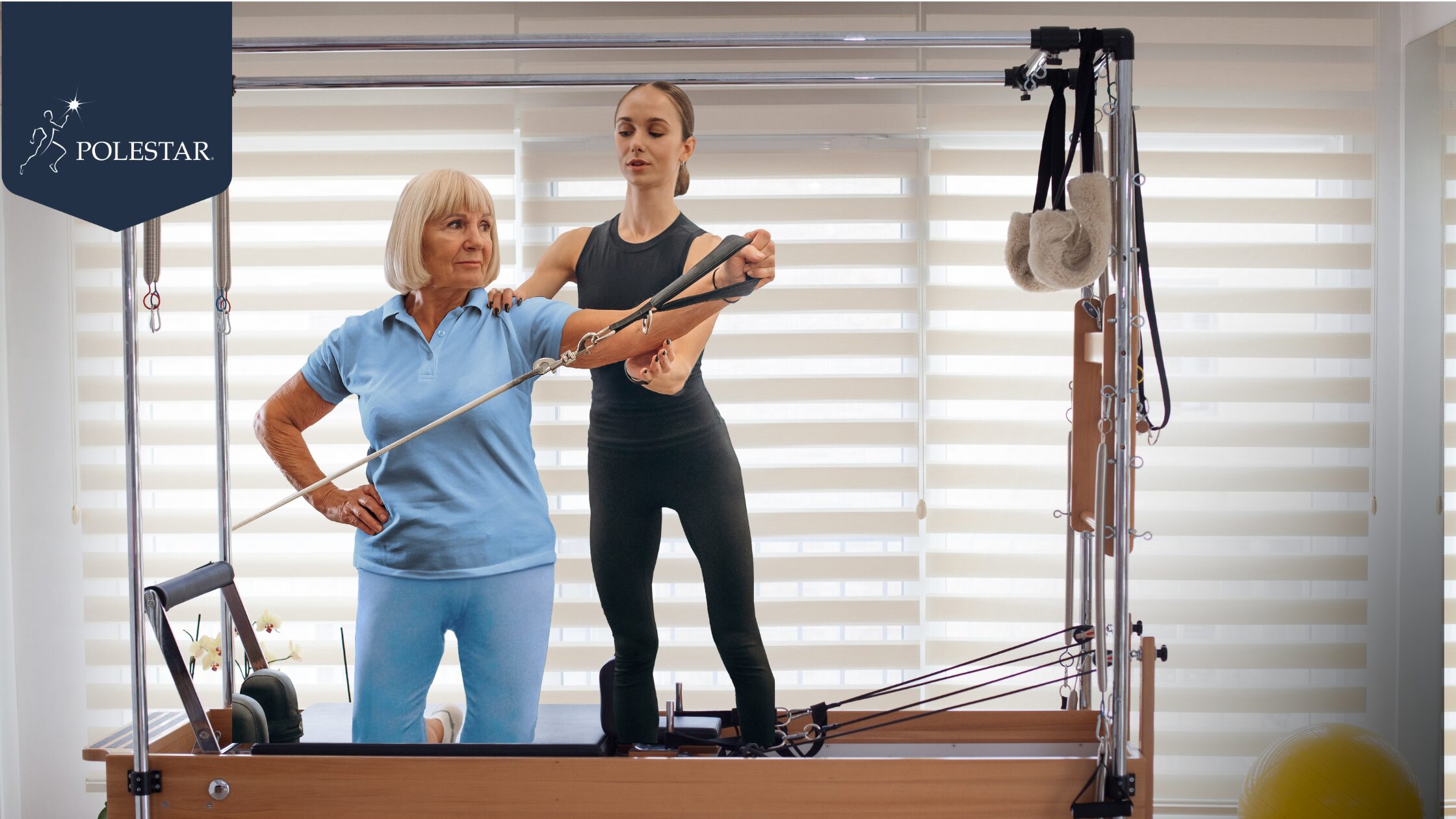
Fear and Lack of Safety in Senior Movement (Pilates for Fear of Falling)
One of the biggest barriers to movement is psychological rather than physical. Many senior clients develop a heightened fear of falling, even if they don’t verbalise it. This fear can subconsciously restrict their movement patterns and lead to further deconditioning.
How Pilates can help: Create a supportive, judgment-free space where clients feel safe exploring movement. Start with small, confidence-building exercises like seated or supported standing movements to help them regain trust in their bodies.
Addressing Negative Beliefs About Aging and Pain
Societal myths about aging often lead senior clients to believe that pain and immobility are inevitable. As Pilates instructors, we know that while age-related changes occur, they do not have to result in chronic pain or disability. In fact, movement is one of the most effective ways to combat discomfort and maintain function.
How to help: Educate your clients that pain is not always a sign of damage and that movement can be a powerful tool for reducing discomfort. Reinforce the message that aging does not mean giving up physical activity.
Interpreting Physical Changes in Older Adults (Understanding MRI & X-ray Results)
Many clients receive MRI or X-ray results that show “degeneration” or “arthritis.” Unfortunately, these findings are often presented in a way that causes unnecessary fear. Clients may assume they should avoid movement when, in reality, these changes are a normal part of aging—like “wrinkles on the inside.”
How to help: Reassure clients that structural findings do not always correlate with pain or function. Encourage them to focus on what they can do rather than what they’ve been told they should avoid.
Overcoming Negative Healthcare Experiences
Some clients may have been told by healthcare providers that they have the “spine of a 90-year-old” or that they should never bend forward again. These well-intended but misguided comments can create long-term fear and movement avoidance.
How to help: Gently challenge these beliefs by offering positive movement experiences. Reinforce that their bodies are adaptable and that movement is not only safe but essential for longevity.
Moving Beyond the Biomedical Model
Traditional medicine often focuses on diagnosing and “fixing” specific issues, sometimes leading clients to believe they must be pain-free before they can move. However, the biopsychosocial model recognises that pain is influenced by physical, psychological, and social factors. Addressing all three is key to supporting our clients.
How to help: Encourage clients to engage in movement even if they experience some discomfort. Help them shift their focus from “fixing” their body to improving function and confidence.
The Power of Movement
Many aging adults underestimate how beneficial movement can be for pain relief and overall well-being. They may think exercise is only for the young or for those without physical limitations.
How to help: Reinforce that movement is medicine. Help them find joy in motion by selecting exercises that are accessible and rewarding. Celebrate small wins and improvements.
Your Role as a Pilates Instructor
At Polestar UK, we train instructors to create meaningful movement experiences that help clients break free from limiting beliefs and movement fears. Pilates is uniquely suited for aging populations because it offers low-impact, adaptable exercises that build confidence and strength in a safe environment. By educating, encouraging, and empowering your clients, you can help them rediscover the joy of movement at any age.
Take the first step in transforming your clients’ perspectives on aging and movement. Join us at Polestar Pilates UK for world-class Pilates instructor training and professional development in the UK.
Watch More on This Topic
For deeper insights into movement barriers and how Pilates can help, explore past episodes of Pilates Hour, where leading experts share their knowledge and strategies for supporting aging clients. Click here to watch now.