Low back pain: when to modify, when to move, when to refer
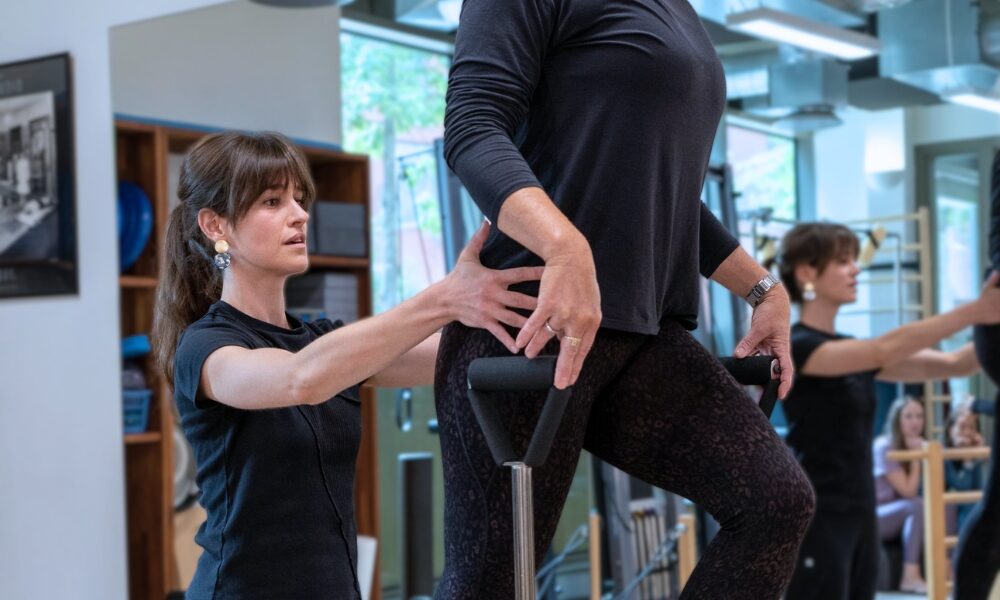
A client lowers herself into the studio chair hand first instead of simply sitting down, and mentions her back has been “a bit much” since the weekend. Before asking what hurts, there is a more useful question: is pilates for lower back pain actually the right call today, or does this client need something else first? Most of the time, movement chosen well is exactly the answer. The skill worth building is knowing, session by session, whether to modify the exercise, keep the plan as it is, or point the client elsewhere before you do either.
It helps to know the scale of what you are working with. Low back pain affected an estimated 619 million people worldwide in 2020, roughly one in 13 of us, and the World Health Organization calls it the single leading cause of disability on the planet. Numbers like that mean nearly every full class you teach includes someone managing it, whether they have told you or not.
Is Pilates good for lower back pain?
For most people, yes, and the evidence and the experience of teachers both point the same way. The catch is that “Pilates helps low back pain” is only true when the session is built around the person in front of you rather than their diagnosis. Two clients can carry the exact same label, lumbar stenosis, say, and present completely differently: different triggers, different tolerance for load, different beliefs about what their back is capable of.
Why isn’t there one answer for every back?
One client may have grown up hearing that everyone in her family “has a bad back,” and already expects to be limited before you have taught a single exercise. Another has simply strained something lifting a wardrobe and wants to get back to normal as fast as possible. Treat the label and not the person, and you will end up modifying the wrong things for the wrong reasons.
That is why the first job in any session is not exercise selection, it is a short conversation. What makes the pain worse? What makes it better? Is this the pain they usually carry, or does it feel different this time? How long has it been going on? The answers tell you more than a diagnosis ever will, and it is worth watching as much as listening: how someone walks in, how they lower themselves into a chair, whether they use their hands to take weight off their spine. All of it is information before a single exercise has started.
Is pain proof that something is damaged?
Not necessarily, and it is worth saying to clients directly. Pain can persist long after tissue has healed, and it can flare under stress even when nothing in the body has actually changed. In a recent Pilates Hour, Shelly Power put it simply: “pain is information, pain is protective,” not a verdict on what someone is allowed to do. That reframe matters, because a client who believes pain always means harm will brace, guard and shrink their movement long after the original strain has settled, which tends to create the very stiffness and fear they are trying to avoid.
When should you modify an exercise rather than stop it?
Take a client like Priya, a regular in your Tuesday reformer class, who mentions she tweaked her back moving a wardrobe over the weekend. If the pain is familiar to her, if she is still up and moving through her normal day, and if nothing about it feels acute or alarming, this is usually a modify-not-stop situation. Swap straight legs in straps for a bent knee version to reduce the load through the lumbar spine, trim the range rather than removing the exercise altogether, and give her one clear thing to monitor rather than a general warning. “Be careful, don’t let your legs go too low” tells a client what to fear without telling her what to do. “Keep the back of your lower ribs connected to the mat” gives her an actual job, and a way to know for herself whether the exercise is going well.
When should the session just carry on?
Plenty of long standing clients with chronic low back pain are better served by staying the course than by being wrapped in cotton wool. If someone has lived with a degree of back discomfort for months or years, and still works, still moves through their day, a well built Pilates session with sensible spring support is often one of the safer things they do all week. The more common teaching mistake runs the other way: being too soft, under loading out of caution, and never testing whether a client is ready for more. Muscle soreness that lingers for three or four days after a session suggests too much load; no response at all can mean there wasn’t quite enough.
When does low back pain need more than a Pilates teacher?
Pain that started suddenly, is highly provoked by ordinary movement, or feels different in character from a client’s usual pattern is a signal to pause rather than push through. That sits outside a Pilates teacher’s scope, and so does diagnosing, or any hands-on joint work without the training for it. In those moments, the right move is a calm conversation and a recommendation, a GP, a physiotherapist, or a second opinion, offered as one option among a few rather than a verdict. It is worth building relationships with a couple of physios you trust before you need them, so a referral feels like part of a plan rather than a dead end.
How do you help clients stop depending on you?
The thread running through all of this is control. Clients do better when they know their own spring settings, their own modifications, and the one specific sign that means pause and tell your teacher, rather than relying on you to catch every problem on their behalf. That shift, from protecting someone to equipping them, is what turns one good session into a client who trusts their own back again.
Curious to go deeper into this kind of clinical reasoning? Dr Brent Anderson’s Introduction to Pathokinesiology runs on Sunday 29 November in King’s Cross, London, and would be a natural next step: https://polestarpilates.co.uk/course/introduction-to-pathokinesiology-w-dr-brent-anderson.
Sources used this week
– https://www.who.int/news-room/fact-sheets/detail/low-back-pain
– https://polestarpilates.com/webinar/