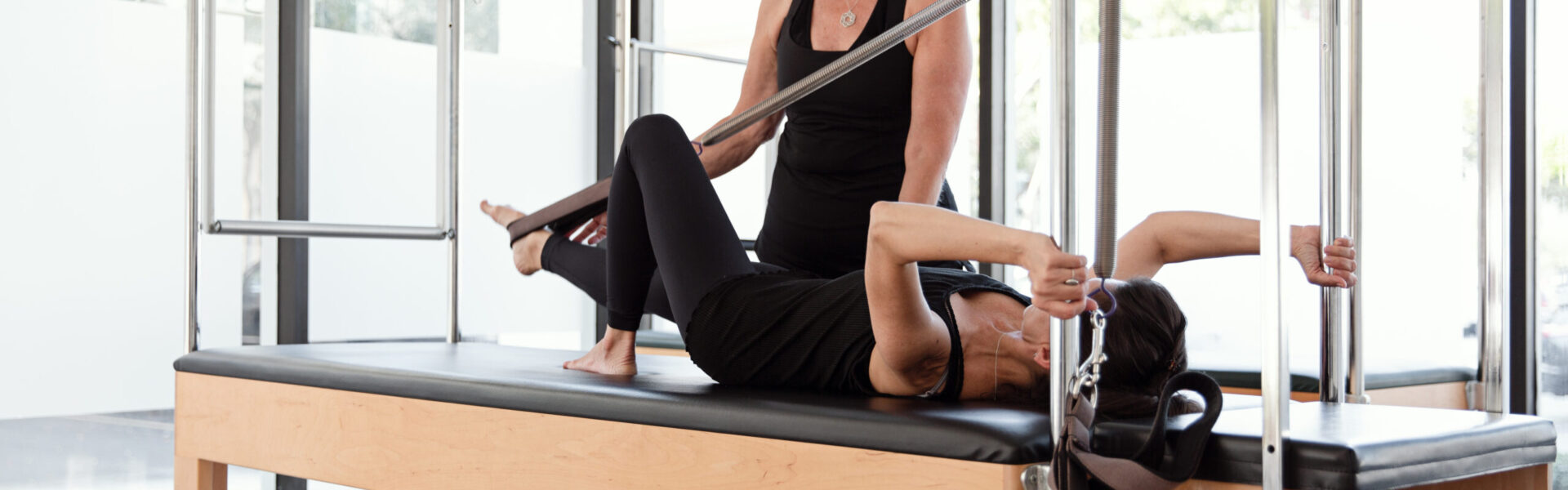
Understanding Chronic Back Pain: It’s Not Just Physical
One of the most powerful messages Brent shares is this: Pain does not always equal injury. Many clients come to Pilates believing their pain is caused by poor posture or damaged tissue. However, research and lived experience show that chronic pain often has less to do with tissue damage and more to do with how the nervous system interprets signals. Brent calls this a “chronic synapse” — a pathway in the nervous system that has learned to perceive normal input as painful, even when the original injury has healed.
This idea is echoed by guests on the Pilates Hour like Adriaan Louw, a physical therapist and pain scientist, who emphasizes that pain is a normal protective mechanism—not necessarily a sign of tissue damage. He advocates for pain neuroscience education as an everyday practice and highlights that words can harm or heal, urging practitioners to avoid fear-based language. Louw believes that stories help “de-threaten” the pain experience by making biological processes understandable and relatable.
Other guests like Juan Nieto, point out that over 90% of Pilates, yoga, and physical therapy clients are dealing with chronic pain. He and Carol Davis advocate for recognizing pain as a multi-system experience, where fascia, neurobiology, and psychosocial dynamics all interact.
In fact, studies and clinical experience show there is very little correlation between posture and pain. Two people may have the same posture or spinal condition, but only one experiences pain. That’s why focusing only on biomechanics often misses the bigger picture.
Why Pilates Works — and Why It’s Not a Quick Fix
The power of Pilates lies in its ability to create positive movement experiences without pain. According to Brent, these experiences begin to rewire the brain and nervous system, allowing clients to shed fear, move more freely, and build trust in their bodies again. He explains that regular, graded movement has been shown to outperform passive treatments in managing chronic back pain.
A key principle Brent teaches is: Distribution of movement equals distribution of force. In other words, when the whole body participates in movement, no single structure bears the entire load. This reduces stress on vulnerable areas and builds overall resilience.
Guests like Christi Idavoy and Loren Davidson support this approach, encouraging clients to notice and feel their movement without labeling it as “good” or “bad.” This fosters a healthier relationship with the body and reduces fear-based movement avoidance.
What Makes Polestar’s Approach Different?
Unlike traditional methods that often focus on “core control” or a fixed list of exercises, Polestar takes a more holistic, adaptable approach:
- We integrate the biopsychosocial model, considering the emotional and psychological components of pain.
- We tailor each session using the ICF model (International Classification of Functioning), aligning with the client’s goals and limitations.
- We prioritize education, helping clients understand pain science and reduce fear.
- We focus on function over perfection, empowering people to do what they love.
What We Can Learn from Critical Reasoning in Pilates
Brent Anderson’s Critical Reasoning framework adds another layer to understanding and working with clients in pain. His six-question approach helps instructors shift from a reactive, fix-it mentality to a collaborative, inquiry-based process. These questions encourage movement practitioners to reflect deeply on what they see, feel, and how they can best support the client’s unique journey:
- What is the client’s primary concern or limitation?
- What do I see in their movement that relates to their story?
- What do I feel is the primary contributing factor (physical, emotional, social)?
- What intervention will most likely promote success in this session?
- How will I know if my intervention is working?
- What is my next step to build on success or shift if needed?
This framework supports clinical reasoning while honoring the client’s lived experience. It empowers instructors to move beyond one-size-fits-all programming and ask, “What’s going well?” and “How can we build on it?” When combined with the principles of positive movement experiences, it makes Pilates not just a tool for pain relief—but a platform for lifelong transformation.
As Brent says, “Stop chasing that magic exercise for low back pain.” There’s no one-size-fits-all solution—only personalized strategies rooted in movement science.
Advice for Teachers and Clients Working with Pain
- For clients: know that you’re not broken. Pain is a message, not a sentence. Trust that movement can be part of your healing journey.
- For instructors: Brent encourages you to ask questions, listen deeply, and avoid language that reinforces fear. Don’t over-emphasize posture, neutral spine, or core tightening as the sole remedy. Instead, create space for curiosity, awareness, and choice in movement.
Beth Kaplanek, who works with clients with osteoarthritis, highlights how misunderstood chronic conditions can respond positively to Pilates when paired with education and successful movement experiences. She shares stories of clients regaining function and hope after traditional care failed them.
Shelly Power and Lise Stolze, both leading voices at Polestar, reinforce the need for mindfulness, client observation, and safe movement language. Shelly emphasizes that most Pilates movements, when done thoughtfully, are inherently safe and beneficial for those with pain.
If symptoms like chest pain or arm numbness are present, always refer out. But for non-specific or chronic back pain, your role as a Pilates educator can be transformative.
Final Thoughts: Movement is Medicine — But It Has to Be the Right Kind
At Polestar, we believe that healing happens through connection, education, and movement. By shifting the narrative from fear to possibility, we help our clients discover what’s truly possible when they move without pain.
Ready to experience the Polestar difference?
- Explore our Pilates Teacher Training Courses in the UK
- Join our free Pilates Hour webinars to hear Brent Anderson and guest experts speak on topics like back pain, scoliosis, and more
- Stay connected: Follow us on Instagram and LinkedIn for insights, stories, and inspiration
Because at Polestar, we don’t just teach Pilates. We teach people how to feel good moving again.